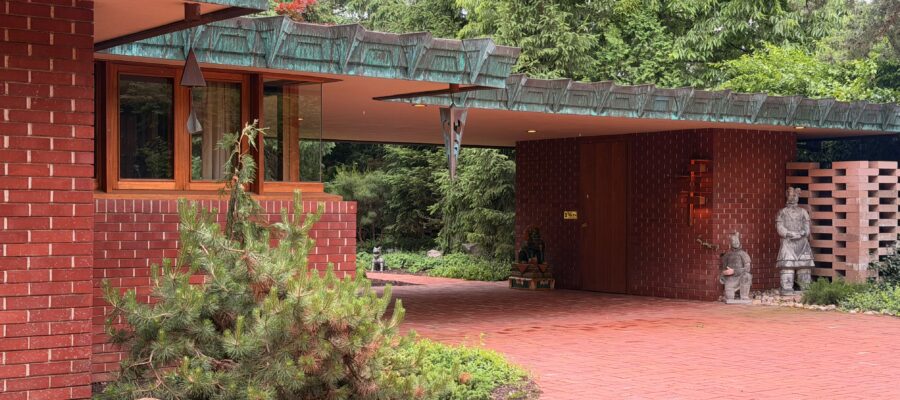
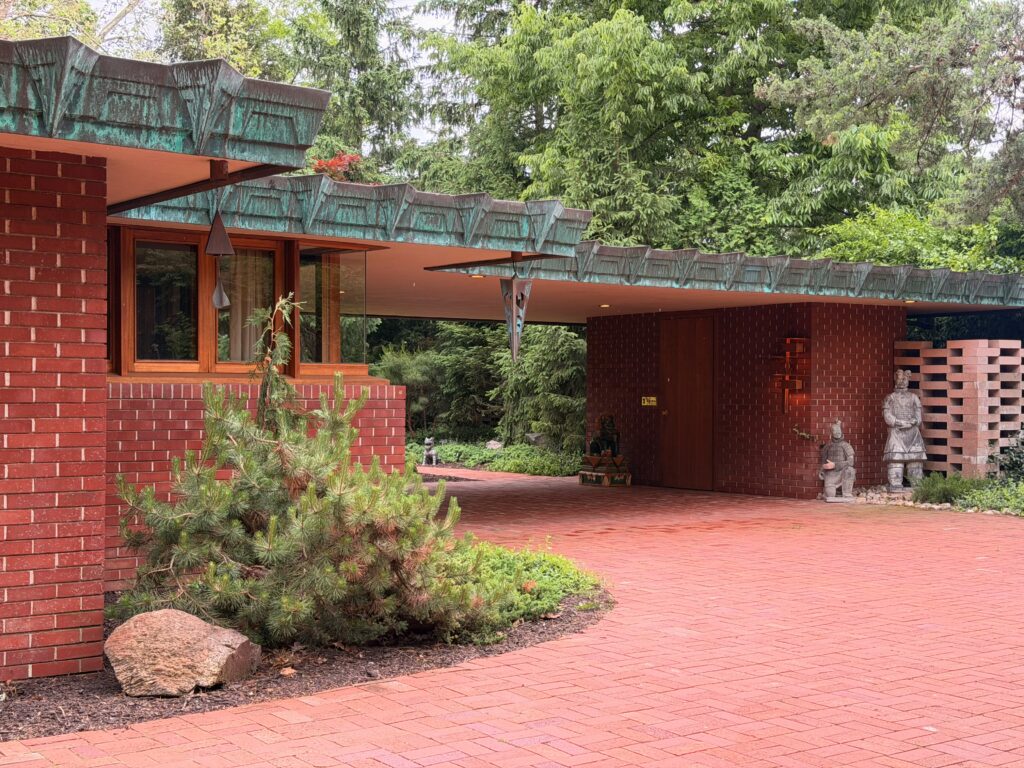
One of Samara’s most striking exterior details is its teal-blue-green copper roofline, a feature that Frank Lloyd Wright envisioned for the house from the very beginning. Wright built Samara’s color palette around a careful balance of warm reds and pinks contrasted with the cool blues and greens of naturally weathered copper. In fact, his original presentation drawings depict the roofline in a light blue-green color long before any copper had been installed.
To achieve that effect, Wright gave Dr. John Christian—Samara’s original homeowner and a trained chemist—a personal challenge: find a way to age new copper 25 years overnight. Christian accepted. Beginning in the mid-1950s, he experimented with copper patina accelerators and, by 1959, developed a formula that could produce a blue-green patina on new copper in less than five minutes.
However, copper does not age in a vacuum. Its color, texture, and durability are shaped by air quality, sun exposure, humidity, surface preparation, and even invisible residues left behind from manufacturing, handling, or protective treatments. For Samara’s recent roof replacement in 2025, contractor Eric Miller of Knickerbocker Roofing and Paving Co. Inc. (Harvey, Illinois) and his sheet metal crew were entrusted with recreating Dr. John Christian’s original patina formula as they repaired and replaced sections of the copper roofline. But matching the Christians’ historic finish was not as simple as repeating a recipe from the 1950s.
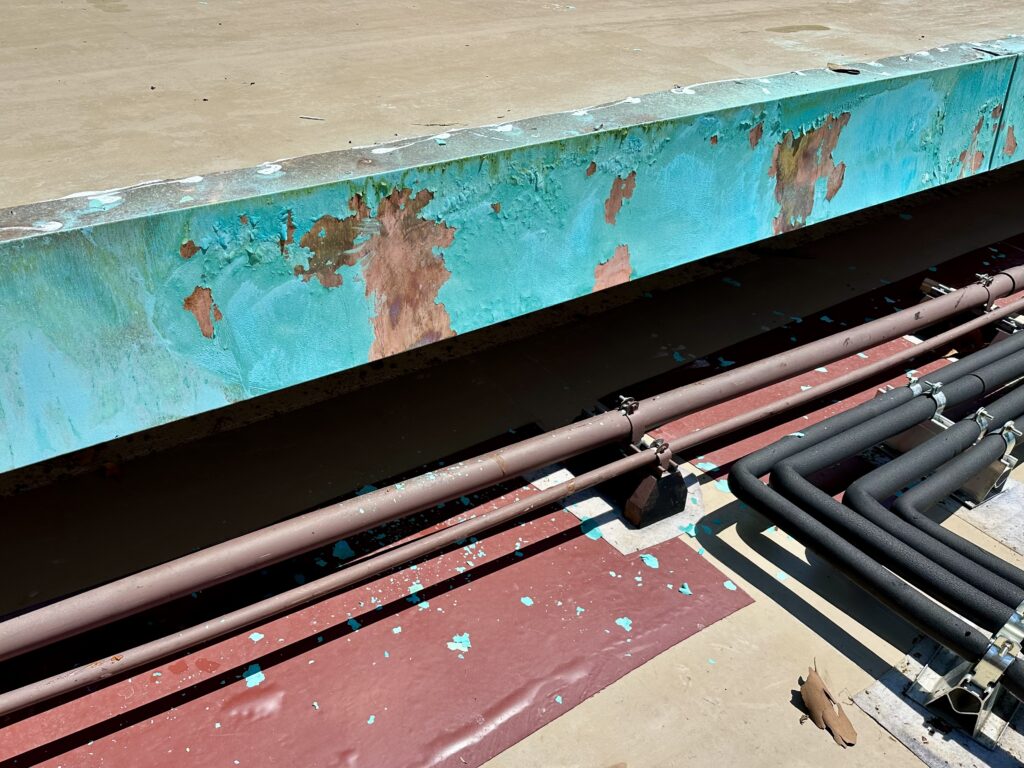
Early tests using the reproduced formula did not behave as expected. Instead of bonding properly to the copper, the finish turned a vibrant cyan-blue and began flaking off in the wind. Even when the process worked in a controlled Chicago workshop, it behaved differently once applied in West Lafayette. Local air pollutants, surface chemistry, and changes in modern copper production all affected the result. The same formula that worked decades ago did not necessarily behave the same way today.
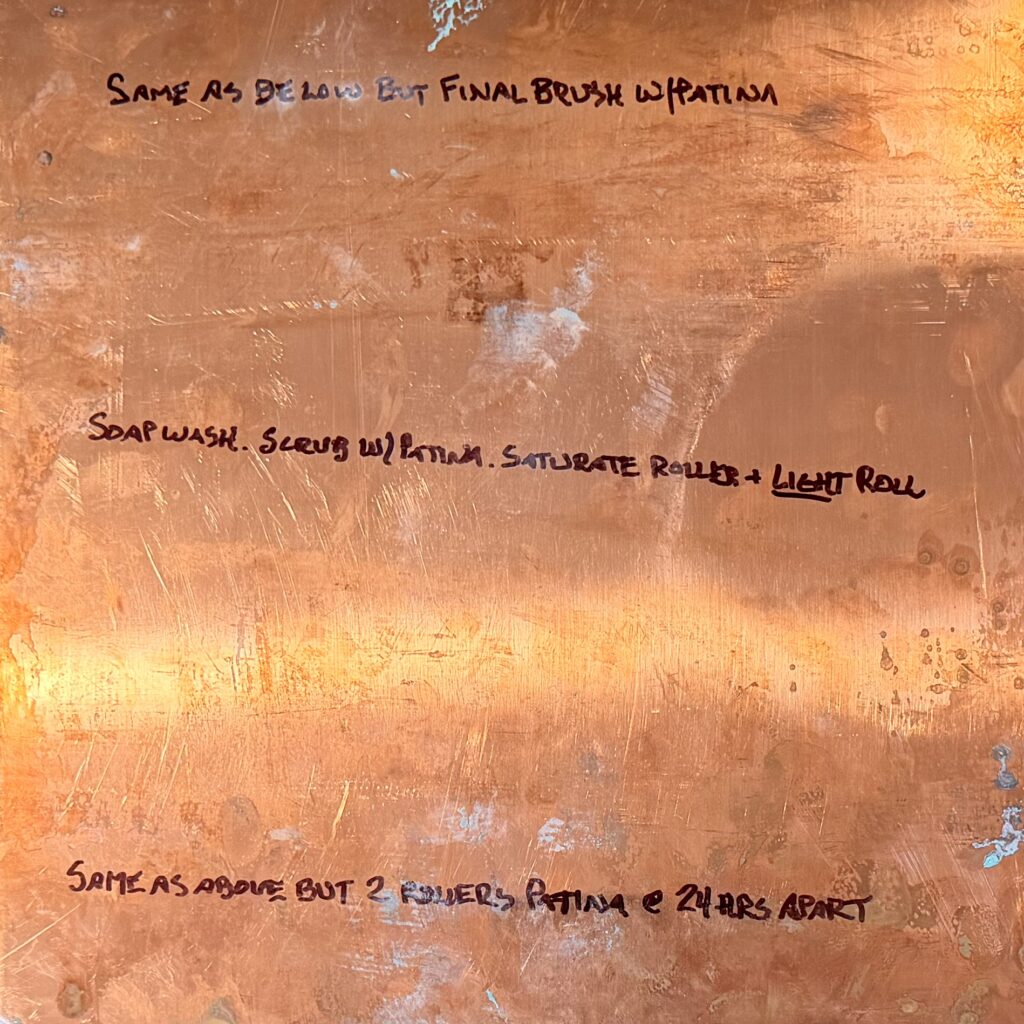
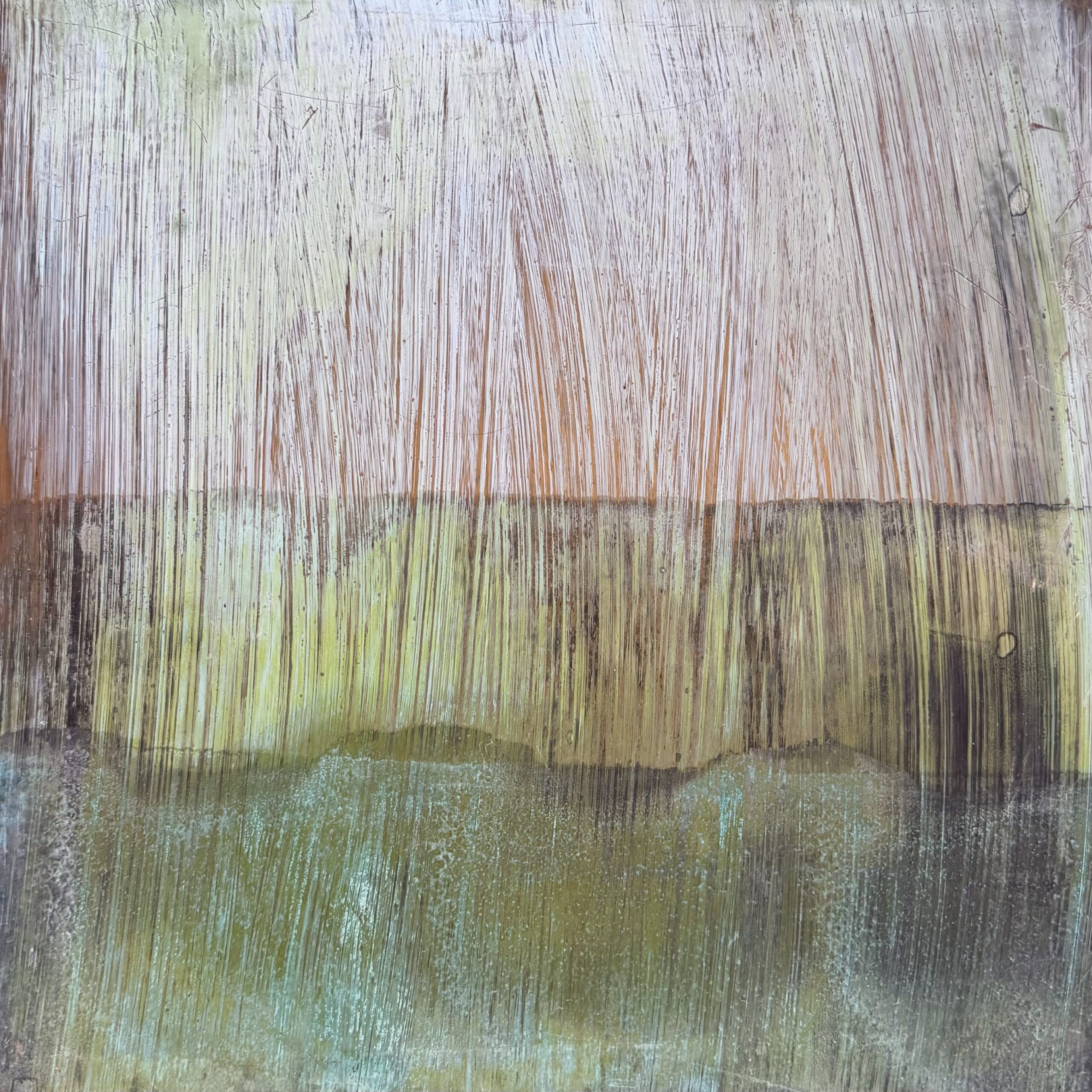
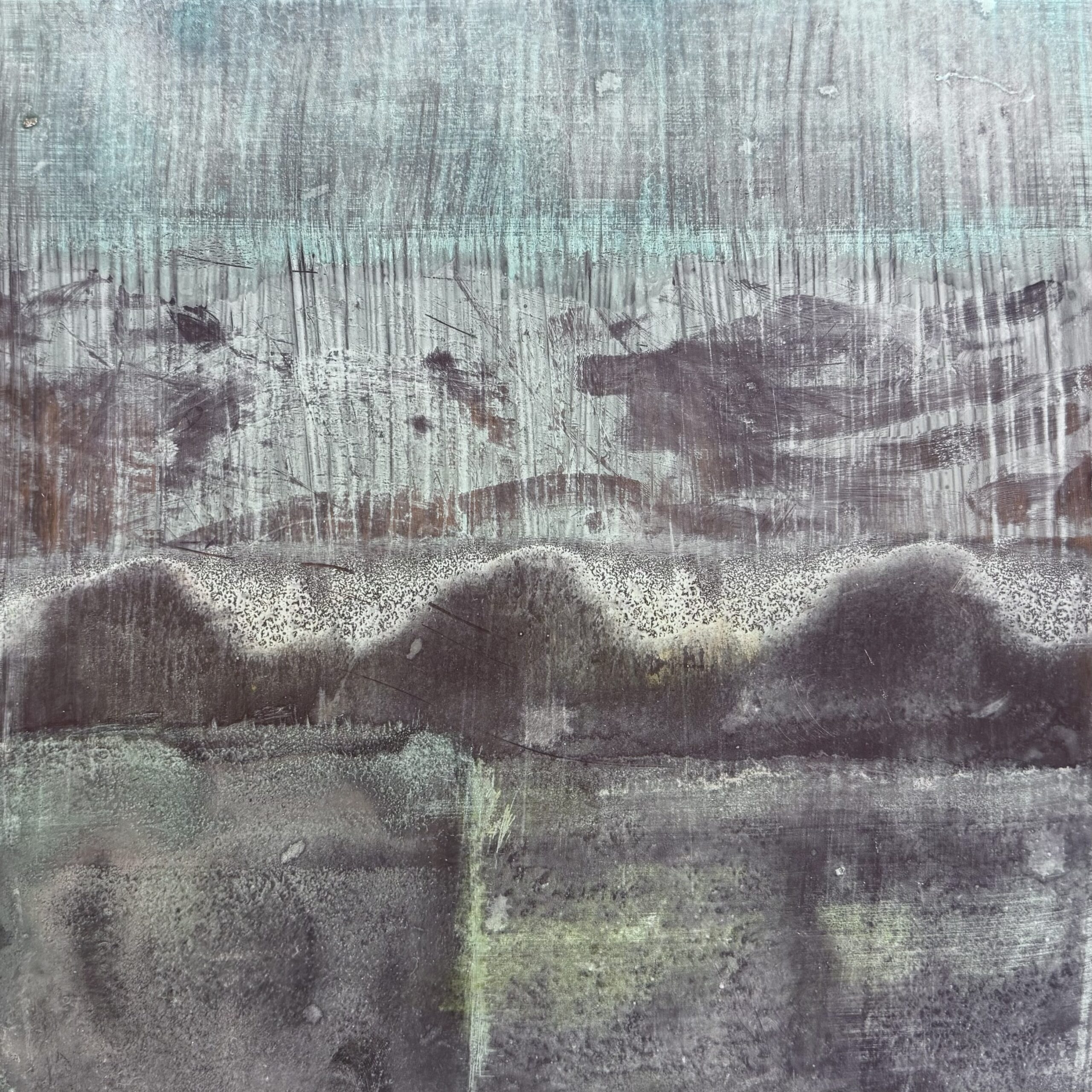
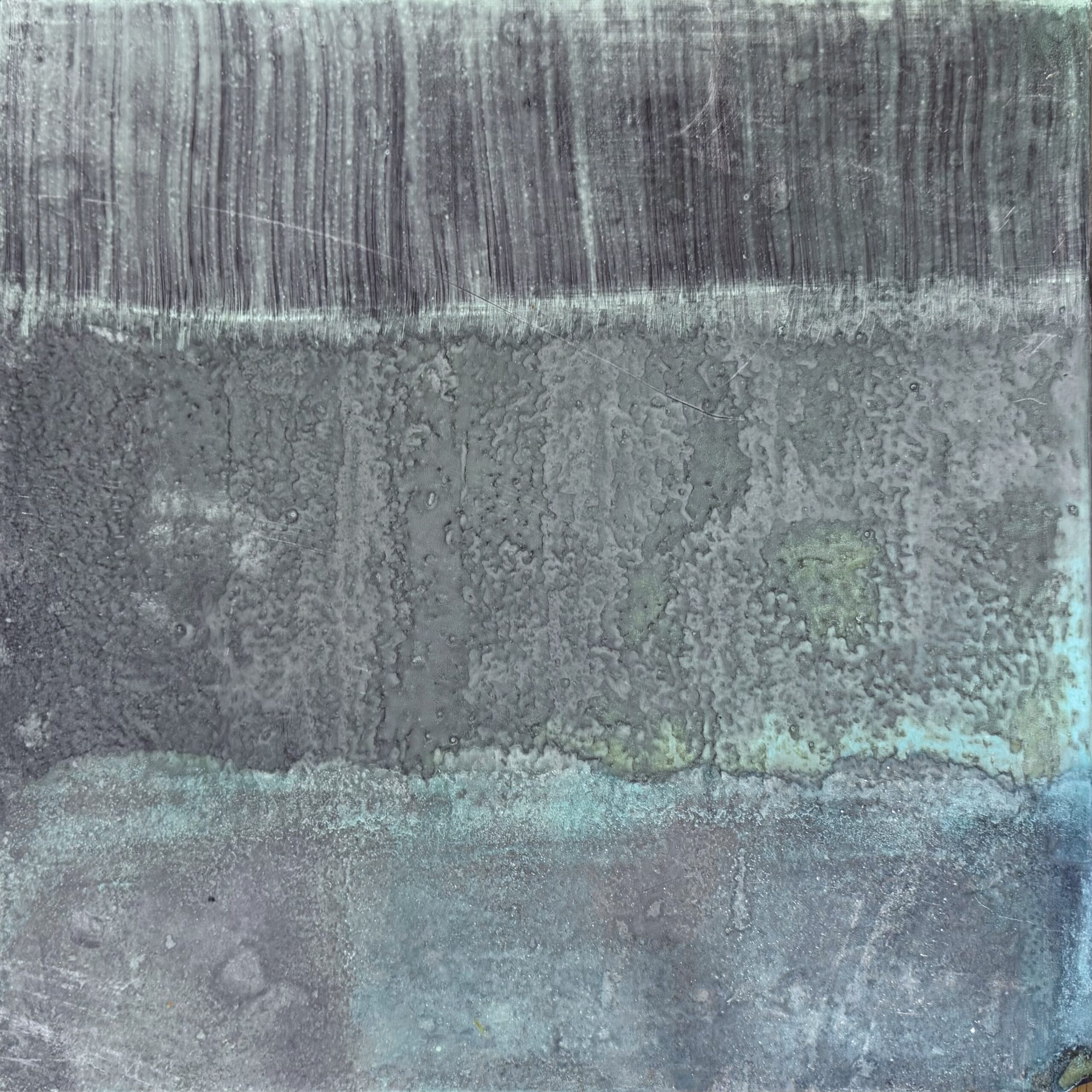
Miller and his crew refined the process through nine separate trials (only three are shown in this blog post). Eventually they found a process that is both a science and an art. First, they applied a very thin, fine base coat by hand with a rag. Then, they brushed on a second coat in soft vertical passes, creating the subtle streaking often seen on naturally aged copper. Finally, they rolled on two or three light coats with a fine sponge roller, settling the surface into a more even field of color. By adjusting the patina formula layer by layer, they could guide the finish toward a deeper blue or a brighter lime green.
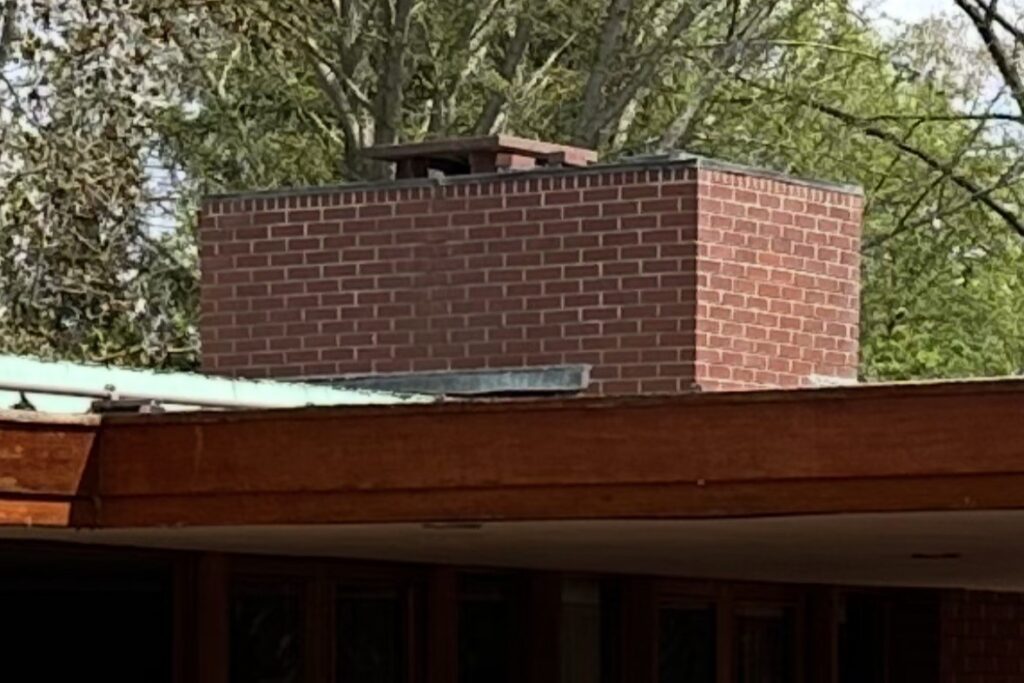
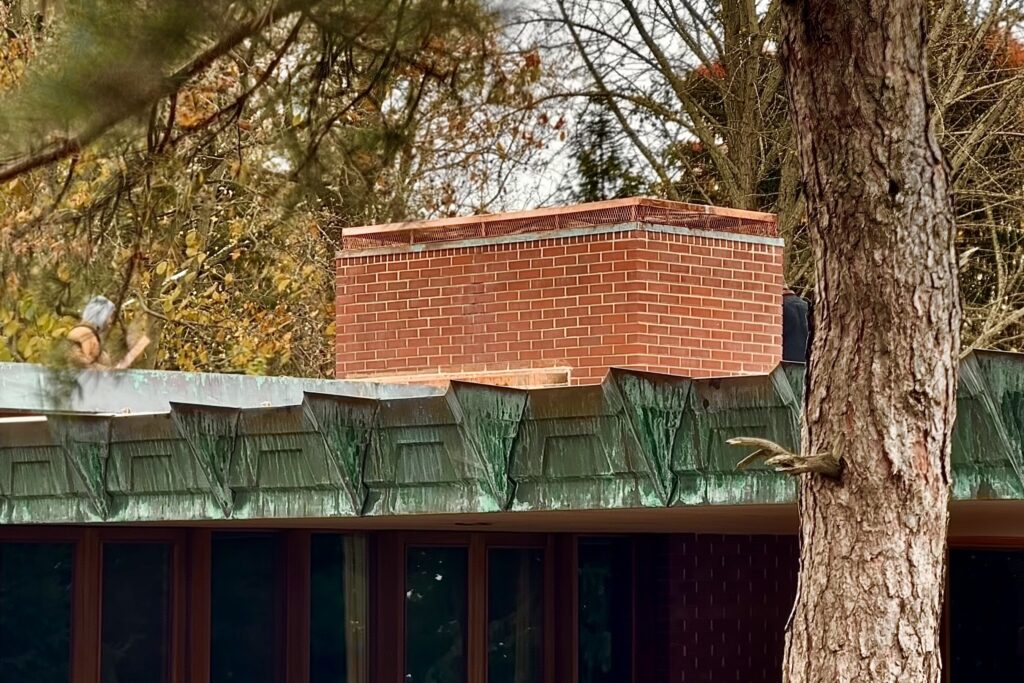
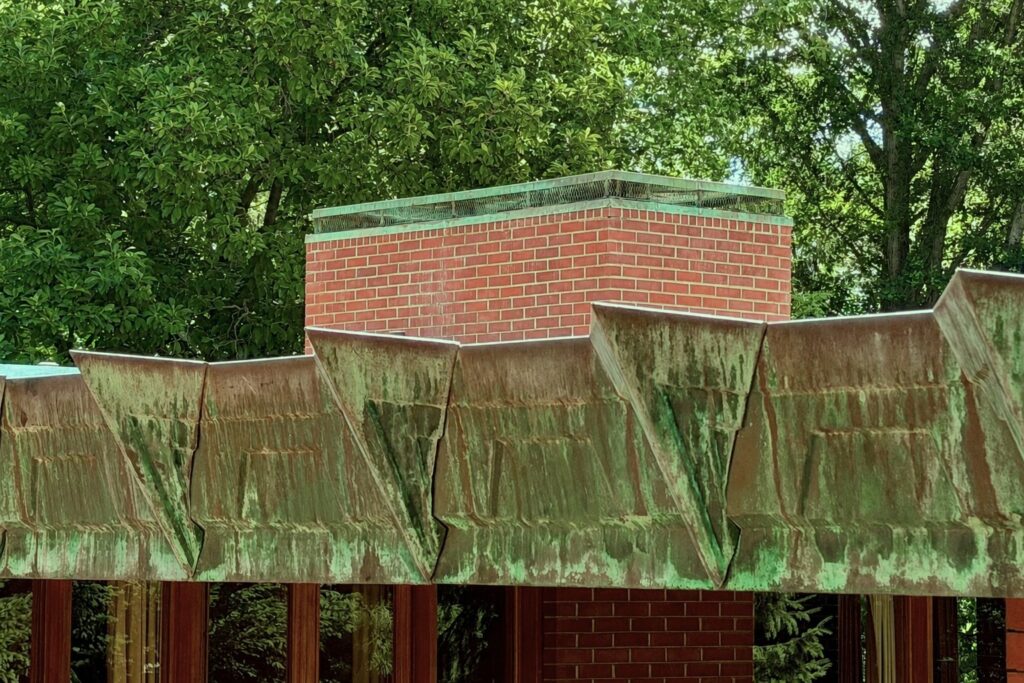
The result is remarkable. While the chemical reaction completes within five minutes, the process itself reflects patient experimentation, close observation, and skilled handwork. Miller’s team was able to match a surviving copper sample believed to date from the 1960s, a small preservation miracle in copper.
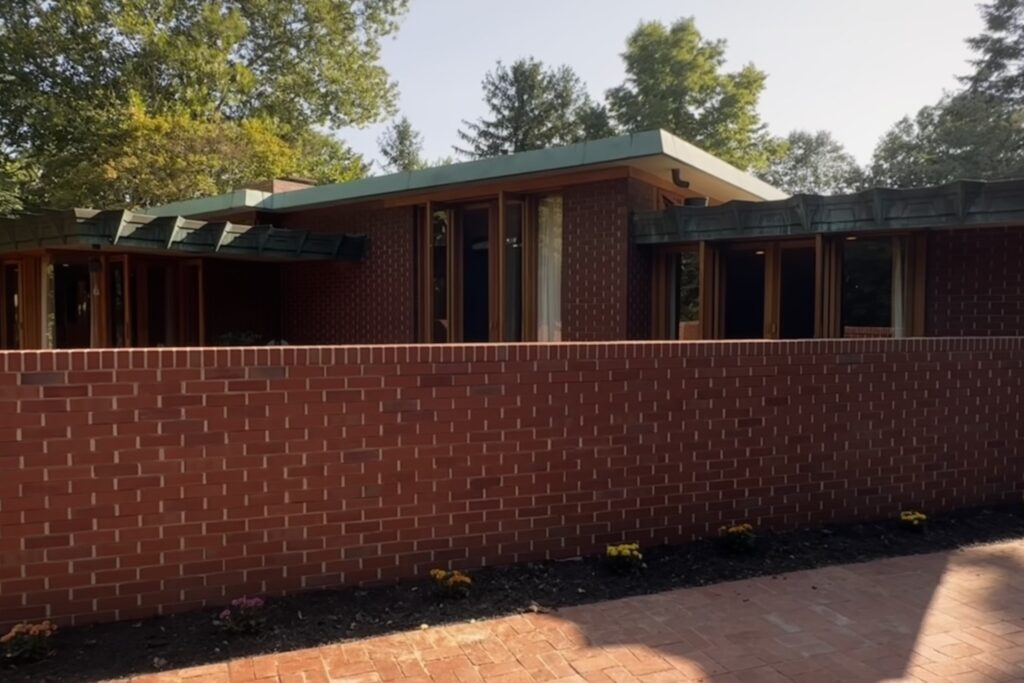
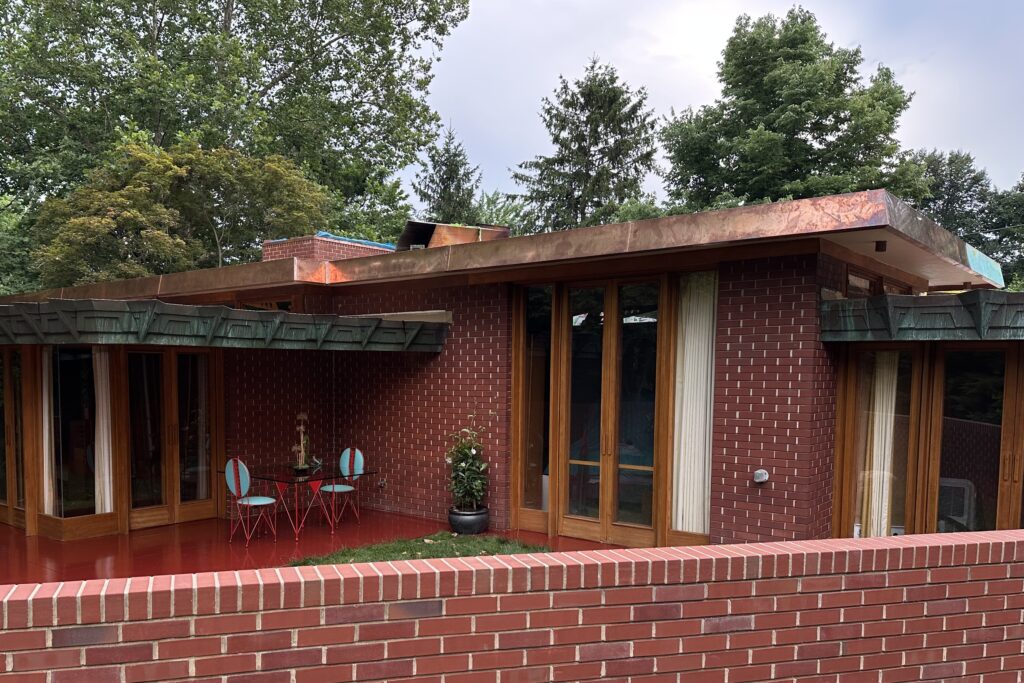
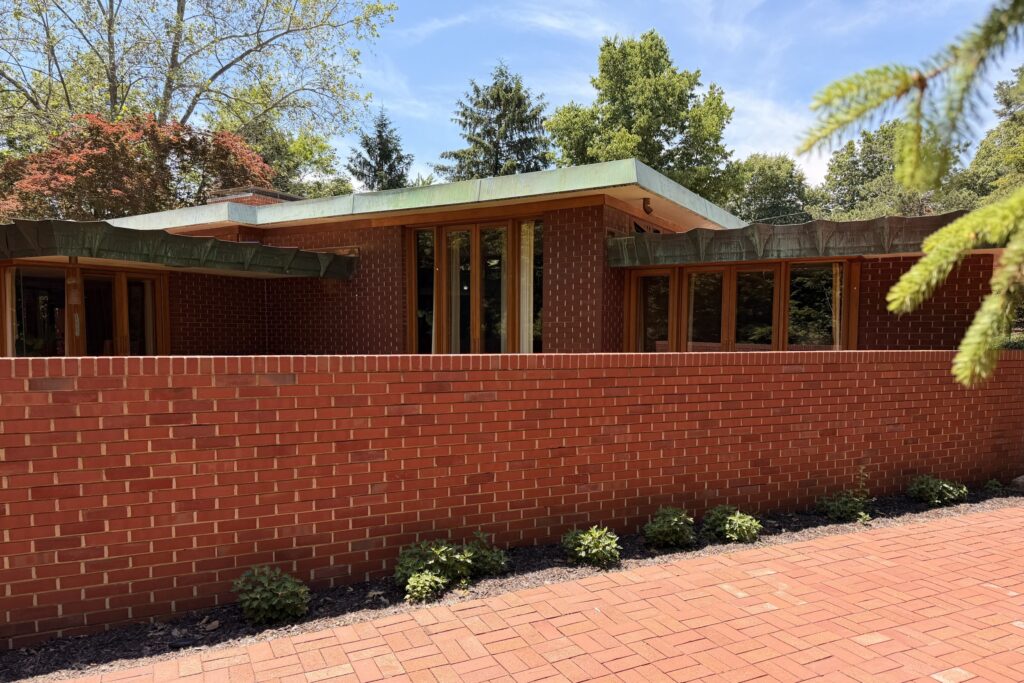
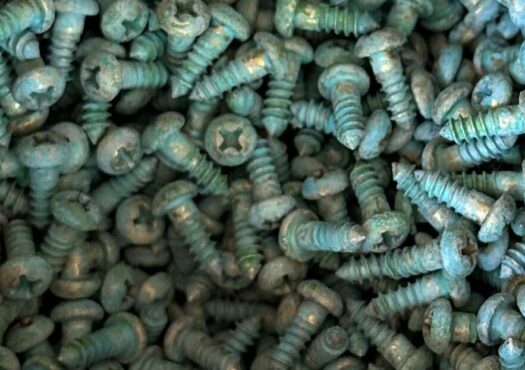
Today, new repairs blend with historic materials, including details as small as screws and rivets, which were pre-patinated before installation. Even the new copper chimney cap, replacing the Christians’ improvised concrete slab set on stacked bricks, now feels at home within Samara’s carefully preserved roofline.