The 1955 Construction Process
Working with Frank Lloyd Wright on the design of Samara was a thoughtful, measured process that spanned several years—and that suited the Christians just fine. With their limited resources, Dr. and Mrs. Christian needed time to consider every aspect Wright proposed (and stash away some cash) before starting construction. The couple first reached out to Wright in early 1950, and while he agreed to take on the project, the Christians wouldn’t receive the final plans for their home until spring 1955. By that point, the Christians had provided Wright with photographs and a topographical map of their lot in the Hills and Dales subdivision of West Lafayette.
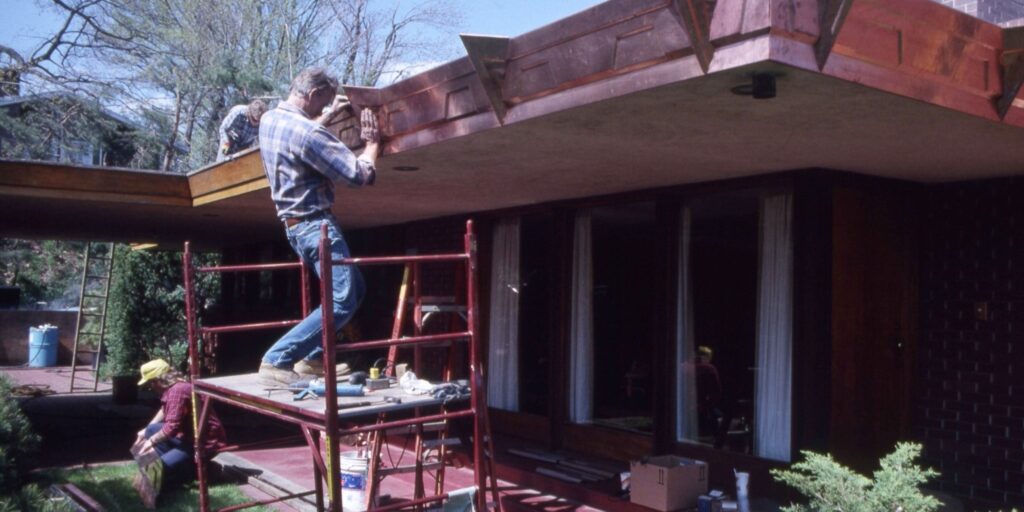
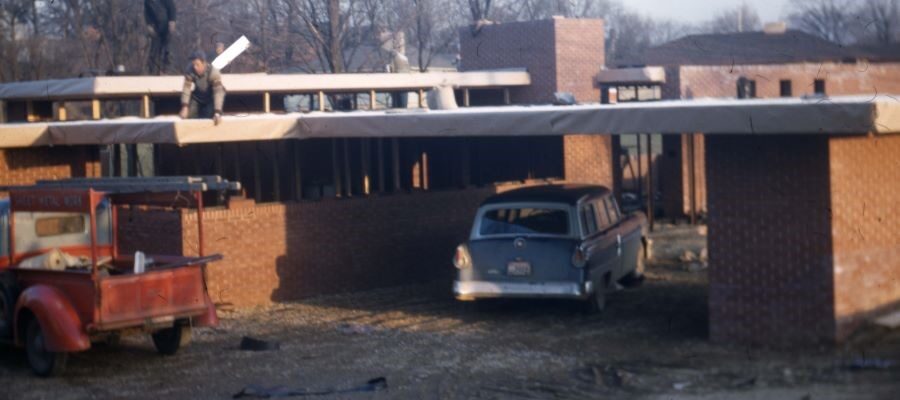
Construction of Samara took about 18 months, beginning with the delivery of bricks on March 14, 1955, and concluding with the Christians moving in on September 7, 1956. We are fortunate to have home movies documenting Samara’s construction, narrated by Dr. Christian himself. These 16 mm films capture the entire process, from the laying of masonry walls to the installation of copper radiant heat pipes and the pouring of concrete floors and patios. True to home movie tradition, there are plenty of waves to the camera by the family as well.
Alongside this footage, the John E. Christian Family Memorial Trust Archives holds numerous photographs, drawings, and meticulously preserved construction documents—all of which serve as invaluable records for the restoration and continued care of Samara. By November 1955, workers had enclosed the home, allowing work to continue inside, including framing, built-ins, and furniture. In spring 1956, they completed the gravity heat system and poured the concrete floor. When the Christians moved in that September, they sealed off the living room with plastic to contain dust while construction of furniture and woodwork continued.
Visitors familiar with the site today will notice how much the surrounding environment has changed from the landscape shown in Dr. Christian’s home movies. What once was a relatively open property with many young trees is now shielded from the busy nearby highway by mature evergreens, just as Wright had envisioned. Knowing the Christians’ fondness for evergreens, the house is named “Samara” after the winged seeds found in their pinecones, a motif reflected throughout the property.
A New Chapter
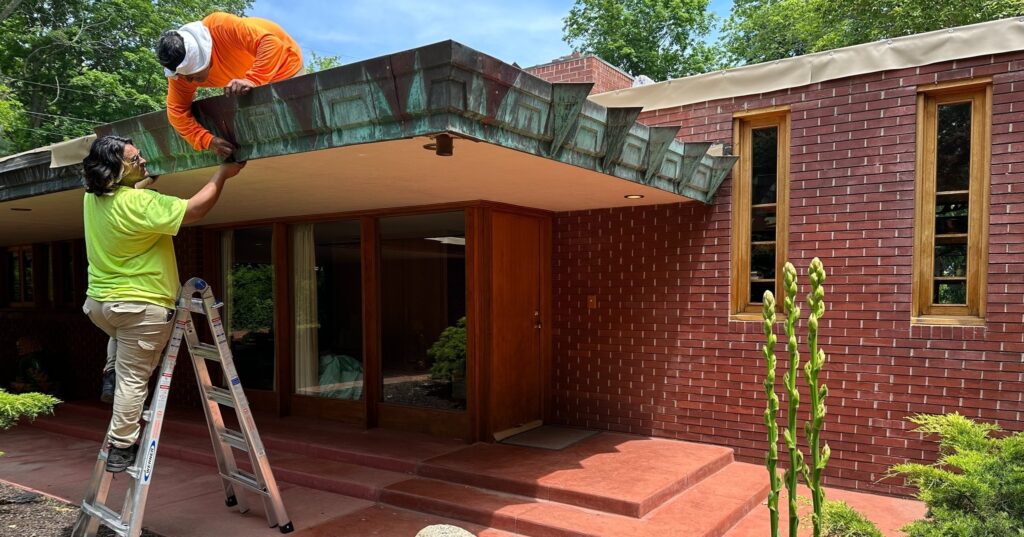
In 2025, workers embarked on restoration of Samara’s roof, removing the existing tar and gravel roof down to its wooden deck and replacing it with a new membrane, marking only the second time in the home’s 70-year history that the roof has been replaced. The project necessitated the removal of decorative copper fascia, which was carefully catalogued and stored during construction. Samara’s extensive holdings include the forms used to shape the original copper pieces, which proved an indispensable help in recreating damaged and deteriorated fascia.
While part of regular upkeep, the roof’s rehabilitation and pause in welcoming visitors allowed us to reflect on Wright’s lasting design legacy and the meticulous attention to detail that went into every part of the home. As caretakers of Samara, our aim is not just to preserve the physical structure, but also to maintain the spirit and integrity of Wright’s craftsmanship for future generations to enjoy. Stay tuned for a closer look at the recently completed construction process, and to learn more about the Christians’ role in the copper fascia that gives Samara’s roofline its distinctive look.